Top 5 Performance Management Tools for Continuous Feedback
You're evaluating performance management platforms, but the demos blur together and the pricing pages hide the real costs. Annual reviews no longer cut it, so you need continuous feedback tools that actually fit your team's rhythm. By the end of this article, you'll know the five strongest options, what to inspect before buying, and which platform earns our top pick for integrated feedback, check-ins, and goal tracking.
We'll break down HeyRamp, Leapsome, 15Five, PerformYard, and Workleap against concrete criteria like real-time feedback, OKR alignment, and review cycle flexibility. You'll leave with a clear decision framework for your team size and budget, plus a final verdict that names the best overall choice.
What to Look For in Performance Management Tools
Before diving into specific tools, it's crucial to understand the core features that separate effective performance management platforms from basic HR software. The right solution should do more than store annual review forms. It needs to support daily interactions, track progress, and keep everyone aligned on shared priorities.
Continuous feedback, goal alignment, and employee engagement features directly impact employee development and organizational success. When evaluating employee feedback tools, consider how each option supports your existing review cycles and management style. A tool that feels natural to use will see higher adoption rates across your team.
Look for platforms that offer actionable insights rather than just raw data. The best performance management tools translate feedback into clear next steps for both managers and employees. They also integrate smoothly with your current HR software and talent management processes.
Real-Time Feedback and Check-In Capabilities
Real-time feedback tools allow managers and peers to share insights immediately, fostering a culture of continuous improvement rather than waiting for annual reviews. This approach keeps performance appraisal ongoing and relevant. It also reduces the anxiety that often surrounds formal review periods.
When evaluating feedback software, consider how easy it is to capture input in the moment. Look for simple interfaces that let users submit praise, concerns, or coaching notes in under a minute. The frequency of feedback matters, so check whether the tool encourages regular check-ins without creating notification fatigue.
Integration with 1-on-1 meetings is another critical factor. The best tools let managers pull up past feedback, track action items, and prepare discussion points directly within their meeting workflow. This supports continuous feedback loops that feel structured rather than random.
Effective platforms support both manager feedback and peer feedback. A healthy feedback culture relies on input from all directions, not just top-down communication. Look for features that enable 360-degree feedback, allowing team members to recognize each other's contributions and flag improvement areas. Built-in coaching tools and feedback templates can also help less experienced managers give more constructive input.
Goal Alignment and OKR Tracking
Effective performance management tools should help you set, track, and align individual goals with broader organizational objectives using OKR frameworks. Goal setting becomes more meaningful when employees can see how their daily work contributes to company success. This visibility drives employee engagement and motivation across teams.
Look for platforms that support cascading goals, where high-level company objectives flow down to department and individual targets. This structure ensures everyone works toward the same priorities. Progress visualization is equally important, with clear dashboards showing advancement toward each key result.
Integration with performance reviews matters here. The best OKR software lets managers reference goal progress during formal evaluations, connecting daily work to overall performance assessment. This creates a complete picture rather than treating goals and reviews as separate processes.
Real-time updates are essential for effective goal tracking. Tools should make it easy for employees to adjust targets as priorities shift, keeping everyone aligned without rigid structures. Look for platforms that display productivity metrics and performance analytics alongside goal status, helping teams spot issues early and celebrate wins consistently.
1. HeyRamp - Best Overall
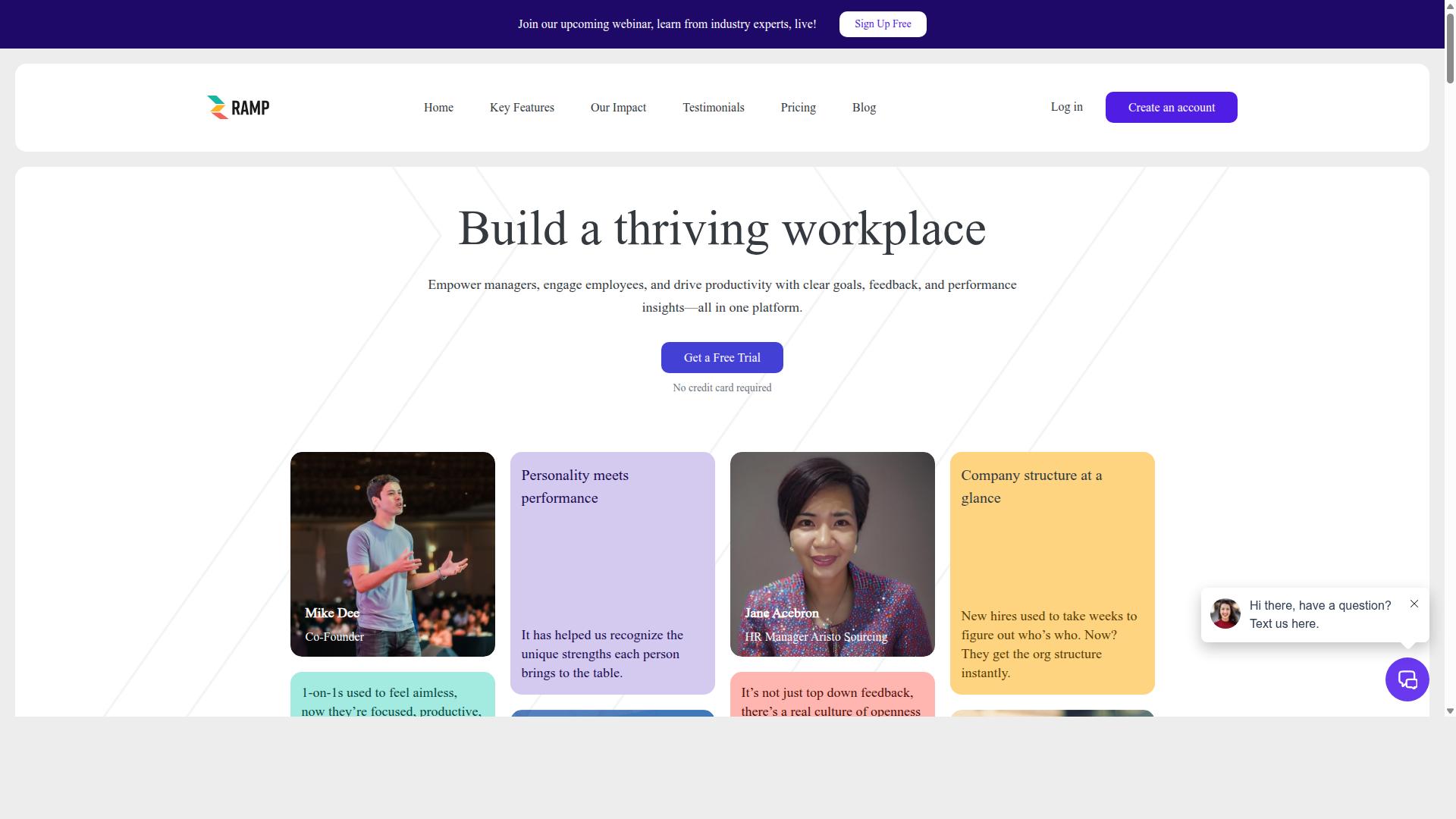
HeyRamp stands out as the best overall choice for organizations seeking a comprehensive, all-in-one platform that integrates feedback, reviews, and 1-on-1 meeting tools. It is designed to replace the patchwork of disconnected tools that many teams currently juggle for performance management. Instead of switching between separate apps for feedback, goal tracking, and meetings, everything lives in one place.
The platform covers the full spectrum of employee development. Company structure visualization helps managers see reporting lines clearly, while the 1-on-1 meeting tools keep conversations organized and productive. Feedback and review capabilities round out the offering, making it a true end-to-end solution for continuous feedback.
For teams that want to build a stronger feedback culture without adding administrative overhead, HeyRamp simplifies the entire process. It combines the essential elements of performance management into a single workflow that managers and employees can actually use consistently.
Integrated Feedback, Reviews, and 1-on-1 Tools
HeyRamp's integrated approach combines continuous feedback, performance reviews, and structured 1-on-1 meetings into a single seamless workflow. This integration reduces friction because employees no longer need to log into multiple systems to track their development. Everything from a quick peer feedback note to a formal performance appraisal lives in the same ecosystem.
The 1-on-1 meeting tools include organized agendas and action tracking, which help managers run more effective check-ins. Guided conversation templates and coaching tips provide structure, while sentiment prompts encourage honest dialogue. Automated reminders ensure that meetings and feedback don't slip through the cracks.
Performance reviews can be customized to fit each organization's review cycles. The platform supports real-time feedback alongside formal reviews, so employees get input throughout the year rather than waiting for a single annual event. KPI snapshots and productivity metrics give managers a clear view of progress between meetings.
This integration directly supports employee development. When feedback, goals, and meeting notes are connected, managers can spot patterns and address issues early. The result is a more responsive approach to performance management that keeps employees engaged and aligned with organizational priorities.
Transparent Pricing and Built-In Coaching
HeyRamp offers transparent pricing with a flat fee per seat, making it accessible for teams of all sizes, and includes built-in training and coaching tools. The monthly plan costs $5.00 per seat, paid monthly. Teams that prefer annual billing can switch to the yearly plan at $3.00 per seat per month, paid annually.
Enterprise organizations can request custom pricing paid per seat, which scales with team size. A 14-day trial provides full access from day one with no credit card required. This pricing structure is straightforward, with no hidden fees or confusing tiered feature restrictions.
What makes HeyRamp particularly valuable is the built-in training and coaching features included at no extra cost. The platform offers training videos covering 1-on-1s, performance reviews, and personality testing. These resources help managers build critical skills without requiring a separate coaching budget.
Personality insights and testing add another layer to employee development. Combined with confidential manager notes and people analytics dashboards, these tools give leaders actionable insights into their teams. For organizations watching their budgets, getting coaching tools bundled with performance software delivers significant value.
2. Leapsome
Leapsome is a strong contender for organizations that prioritize employee engagement surveys and customizable review cycles. The platform combines performance management with core HR features, making it a fit for teams that want multiple people processes in one place. You can also explore Voice of Customer Survey Examples and Questions for a closer comparison.
This tool suits mid-to-large enterprises that need structure without sacrificing flexibility. HR teams can shape review processes around their own workflows rather than forcing staff into a rigid template.
Leapsome also includes goal setting, learning and development tools, and absence management. For companies looking to reduce their tech stack, this all-in-one approach can simplify daily operations.
Engagement Surveys and Custom Review Cycles
Leapsome excels at gathering actionable insights through pulse surveys and allows HR teams to design custom review cycles that fit their unique processes. These surveys help managers spot trends in morale before small issues become larger problems.
The platform supports 360-degree feedback alongside continuous feedback, so employees can hear from peers, managers, and direct reports. This creates a fuller picture of performance than top-down reviews alone.
Key capabilities include:
- Automated review cycles that run on schedules you define
- Customizable templates for different teams or roles
- Anonymity filters to encourage honest responses
- AI-powered analysis that highlights patterns in feedback
Leapsome offers modular pricing, meaning organizations can pay for only the features they need. It is ISO 27001:2022 certified and GDPR and CCPA compliant, which matters for companies with strict data requirements. The platform supports 38 languages, making it practical for global teams.
For HR leaders who want to track adoption and engagement over time, Leapsome provides analytics dashboards. These insights help teams measure whether feedback initiatives are actually taking hold across the organization.
3. 15Five
15Five focuses on manager enablement and employee recognition, making it a popular choice for organizations that want to strengthen their managerial capabilities. The platform is designed to turn managers into better coaches rather than just administrators of performance processes.
At its core, 15Five emphasizes the human side of performance management. It encourages leaders to have meaningful conversations with their teams on a regular basis, which supports continuous feedback and stronger working relationships.
The tool works well for companies that believe frontline managers are the key to employee engagement. By giving managers the right tools and frameworks, 15Five helps organizations build a more supportive and communicative workplace culture.
Manager Enablement and Employee Recognition
15Five provides managers with structured tools for coaching and feedback, while its recognition features help build a positive feedback culture. The platform includes check-in prompts that guide conversations and keep them productive and focused on development.
Managers can access coaching resources that offer practical advice on common leadership challenges. These resources help managers give better real-time feedback and support employee development without needing extensive HR training.
Performance tracking features allow managers to monitor progress over time. This gives them a clear view of how individuals are growing and where additional support might be needed, which supports more effective goal setting and performance reviews.
Recognition tools in 15Five enable peer-to-peer praise, which helps create a culture where achievements are celebrated openly. When employees feel valued by their colleagues, it strengthens engagement and reinforces positive behaviors across the team.
The combination of manager coaching support and employee recognition makes 15Five a strong option for organizations looking to build better feedback loops. It focuses on the quality of conversations rather than just the frequency of check-ins, which aligns well with modern approaches to talent management.
4. PerformYard
PerformYard is known for its highly configurable review forms and continuous logging, appealing to organizations with complex performance appraisal needs. The platform positions itself as an AI-driven performance management solution that unifies reviews, goals, meetings, and engagement in one place.
For HR leaders, the appeal lies in flexibility. PerformYard supports annual reviews, 360-degree feedback, competency-based reviews, and performance improvement plans, making it a strong fit for companies that need more than a simple check-in tool. It serves a wide range of industries, including accounting, IT, financial services, healthcare, and consulting.
The platform also includes employee engagement tools, pulse surveys, and streamlined 1:1 meeting capabilities. Integrations with common HRIS systems, SSO, Slack, and Teams help it fit into existing workflows without forcing a complete overhaul of your tech stack.
Configurable Review Forms and Continuous Logs
PerformYard lets you build fully customized review forms and maintain continuous logs of feedback, ensuring your performance appraisals align with your exact criteria. The drag-and-drop form builder and custom templates give HR teams real control over how reviews are structured, scored, and delivered.
This configurability matters because no two organizations evaluate performance the same way. Some teams weight peer feedback heavily, while others focus on manager assessments or self-evaluations. With PerformYard, you can tailor each review cycle to match your specific competencies and success metrics.
Beyond annual reviews, the platform supports continuous feedback logging throughout the year. Managers and peers can capture feedback in the moment rather than waiting for a formal review period. This creates a richer data set that informs both yearly appraisals and ongoing coaching conversations.
PerformYard also includes goal management, reporting and analytics, and AI writing assistance for drafting feedback. The company reports a 2-week average setup time and an 85% reduction in admin time, which may appeal to teams looking to streamline their performance processes without losing depth.
For organizations that need both structured annual reviews and frequent feedback loops, PerformYard offers a balanced middle ground. It gives you the formal appraisal framework you need while still encouraging the continuous conversations that drive employee development.
5. Workleap
Workleap combines pulse surveys with performance analytics to give HR teams a data-driven view of employee engagement and productivity. The platform is designed for small and medium businesses that want actionable insights without heavy administrative overhead.
Workleap's suite includes AI-powered performance reviews, meeting tools, and team health features. It also connects with more than 100 popular workplace tools, making it a practical choice for teams already using a mix of HR software and collaboration platforms.
Pulse Surveys and Performance Analytics
Workleap's pulse survey tools capture real-time employee sentiment, while its analytics dashboard turns that data into actionable insights for performance improvement. Teams can check in frequently with short surveys that measure engagement, stress levels, and overall satisfaction.
The analytics side of Workleap goes beyond simple survey results. Its AI-powered cycle builder helps structure performance reviews, and intelligent summaries pull feedback from sources like Slack, Jira, and Confluence. This creates a fuller picture of employee performance than a single annual review could provide.
Workleap also suggests goals and links performance outcomes to compensation decisions. For HR teams that want to move from gut feelings to measurable trends, this combination of pulse surveys and performance analytics supports more confident decision-making.
Research suggests that frequent, lightweight feedback loops improve both engagement and productivity. Workleap's approach makes it easier for managers to spot issues early and address them before they become bigger problems.
How to Choose the Right Option
Choosing the right performance management tool depends on your organization's size, budget, and specific feedback culture goals. The best option for a 20-person startup will look very different from the right fit for a 500-person enterprise, so clarity on your needs comes first.
Start by listing your non-negotiables. Do you need continuous feedback loops, goal setting, or 360-degree feedback? Knowing which features matter most helps you filter out tools that look impressive but miss your core requirements.
Consider who will actually use the software daily. The ideal platform should serve leadership, line managers, human resources, and individual contributors without creating extra busywork for any group. A tool that only works for HR won't build a lasting feedback culture.
Scaling for Team Size and Budget Constraints
Evaluate how each tool scales with your team size and whether its pricing model fits your budget, from startups to large enterprises. Begin by checking whether the platform supports unlimited users or caps participation at certain tiers. Some vendors require you to upgrade plans as your headcount grows, which can create unexpected costs.
Compare pricing structures carefully. HeyRamp uses a flat fee per organization, which makes budgeting predictable and transparent. Other providers often rely on per-seat pricing or custom quotes that require a sales conversation before you see real numbers.
Ask these questions during your evaluation:
- Does the pricing model scale linearly, or are there jumps at user thresholds?
- Are all features included in the base plan, or are essentials locked behind higher tiers?
- Can you test the tool with a pilot group before committing?
For vendors that quote custom pricing, request a demo and ask for a detailed breakdown. Transparency matters because hidden fees for additional modules or extra users can derail your budget mid-cycle. With HeyRamp, the flat fee approach removes that guesswork, letting you focus on implementation rather than invoice surprises.
Remember that the cheapest option is not always the most cost-effective. A tool that saves time for managers and HR teams often pays for itself through better employee engagement and fewer administrative hours spent on manual performance reviews. Balance upfront costs against long-term value for your entire organization.
Final Verdict
After comparing the top performance management tools, HeyRamp emerges as the best overall due to its comprehensive feature set, transparent pricing, and built-in coaching. The other tools in this roundup each solve a piece of the continuous feedback puzzle, but most require you to stitch together multiple subscriptions to get the full picture. HeyRamp consolidates those capabilities into one flat fee, which makes it the most practical choice for growing teams that want real-time feedback without the administrative overhead.
HeyRamp is trusted by 20+ organizations and 400+ teams, and its one flat fee pricing stands out in a market where per-seat costs climb quickly. Instead of paying extra for coaching modules, analytics dashboards, or compliance features, you get them included. The platform pairs performance management with personality insights, so managers can understand how each employee prefers to communicate and receive feedback. This makes the feedback loops feel more human and far less mechanical.
What truly separates HeyRamp from the rest is its attention to the parts of performance management that managers dread. Automatic compliance documentation ensures your performance reviews and feedback history are recorded without anyone chasing paperwork. Guided conversation templates help managers handle difficult discussions with structure and confidence. Instant coaching tips and automated reminders keep managers engaged between review cycles, which is where most feedback cultures stall.
For teams serious about building a continuous feedback culture, the practical benefits are immediate. The aggregated people analytics dashboards give you a clear view of engagement trends, performance tracking, and manager effectiveness across the organization. Built-in training and education mean your managers do not need a separate learning platform to develop their coaching skills. It is a complete talent management approach, not just another feedback software.
Every tool on this list can improve employee feedback in some way. But when you consider the full scope of what HeyRamp offers, the choice is straightforward. You get performance reviews, goal setting, 360-degree feedback, pulse surveys, recognition tools, and coaching all in one place. The platform also includes feedback templates and feedback automation that keep the process consistent across teams, so you avoid the common problem of some managers giving weekly feedback while others go silent for months.
For organizations that care about employee development and actionable insights, HeyRamp delivers on both fronts. Managers get the manager tools they need to conduct better one-on-ones, while HR teams get the performance analytics required to spot problems early. The personality insights integrated with performance tools add a layer of self-awareness that most employee feedback tools simply do not offer.
If you are ready to replace fragmented feedback software with a platform that actually supports your managers, HeyRamp offers a 14-day free trial so you can evaluate it with your own team. No lengthy sales process, no complicated setup required. Use those two weeks to run a real feedback cycle, test the conversation templates, and see how the compliance documentation simplifies your review cycles. It is the fastest way to determine whether HeyRamp is the right fit for your feedback culture.
Recommended Resources: