Top 7 Alternatives of Perdoo for KPI Tracking
You are comparing KPI tracking tools because your current stack feels clunky or disconnected from actual performance reviews. Most teams hit this wall when dashboards become static and feedback stays siloed from the numbers.
By the end of this article, you will have a concrete comparison of seven Perdoo alternatives, clear criteria for evaluating real-time progress features and integrations, and a definitive number-one pick for unifying KPI tracking with performance insights. The final verdict will give you a shortlist you can act on immediately.
What to Look For in Perdoo Alternatives for KPI Tracking
Before diving into specific Perdoo alternatives, it's essential to define the criteria that matter most for effective KPI tracking and OKR alignment. The right tool should do more than store goals. It needs to connect daily work to broader business objectives while giving leaders a clear view of performance.
Start by evaluating how each platform handles real-time progress tracking. Static spreadsheets and manual status updates create lag and confusion. A modern KPI software should reflect changes instantly, so everyone works from the same current data.
Next, consider integration with existing tools. Your team already uses project management, communication, and CRM platforms. The best OKR software fits into that ecosystem rather than forcing a new workflow. Finally, weigh ease of use and scalability. A tool that works for a five-person team should still perform well at fifty or five hundred employees.
Keep these strategic factors in mind as you review the detailed criteria below. They will guide your evaluation and help you choose an alternative that supports sustainable goal management.
Core KPI Tracking and Real-Time Progress Features
Effective KPI tracking requires real-time visibility into progress, clear metrics visualization, and the ability to update statuses without friction. When evaluating alternatives, look for a KPI dashboard that refreshes automatically. Manual updates lead to stale data, missed milestones, and confusion about current performance.
Customization is another critical factor. Your business goals are unique, so your KPI metrics should reflect that. Look for platforms that let you define custom targets, set milestones, and track progress bars at a glance. The ability to tailor scorecards to different teams or departments is also valuable.
During a demo or trial, test the visual data representation. Ask yourself these questions:
- Can I see progress toward quarterly goals without digging through multiple screens?
- Are targets and benchmarks clearly displayed next to current performance?
- Does the platform support automatic updates from connected data sources?
- Can I view both high-level strategy and detailed KPI examples in one place?
Real-time tracking eliminates the pain of manual reporting. It gives teams immediate feedback on their performance measurement efforts. When progress bars update automatically, accountability improves and strategic planning becomes more accurate. Look for tools that make progress tracking effortless, not another administrative burden.
Integration Capabilities and Ease of Use
A Perdoo alternative should seamlessly work together with your existing tech stack and be intuitive enough for all team members to adopt quickly. Poor integrations create data silos and force duplicate entry, which undermines data accuracy across your entire performance management process.
Start by listing the tools your team uses daily. Common examples include Slack for communication, Jira for development work, and Salesforce for customer management. The OKR platform you choose should connect with these systems to automate progress tracking and workflow automation. Strong integrations reduce manual effort and keep KPI data consistent across platforms.
Ease of use matters just as much as technical capability. A complex interface slows adoption and leads to inconsistent usage. During evaluation, consider the onboarding time. Can a new user set up a KPI dashboard within their first hour? Is the user interface clean and logical, or does it require extensive training?
Ask these specific questions during vendor demos:
- Does the platform support API access for custom integrations?
- How quickly can a typical team member learn to update their OKR progress?
- Are there templates or pre-built KPI examples to accelerate setup?
- How does the tool handle data synchronization with our existing analytics and reporting systems?
Integration quality directly impacts team collaboration. When data flows automatically between systems, employees spend less time on administrative updates and more time on actual work. Poor integration, by contrast, creates friction and resistance. Prioritize platforms that feel natural to use from day one, because adoption is the foundation of successful goal setting and alignment.
1. HeyRamp - Best Overall
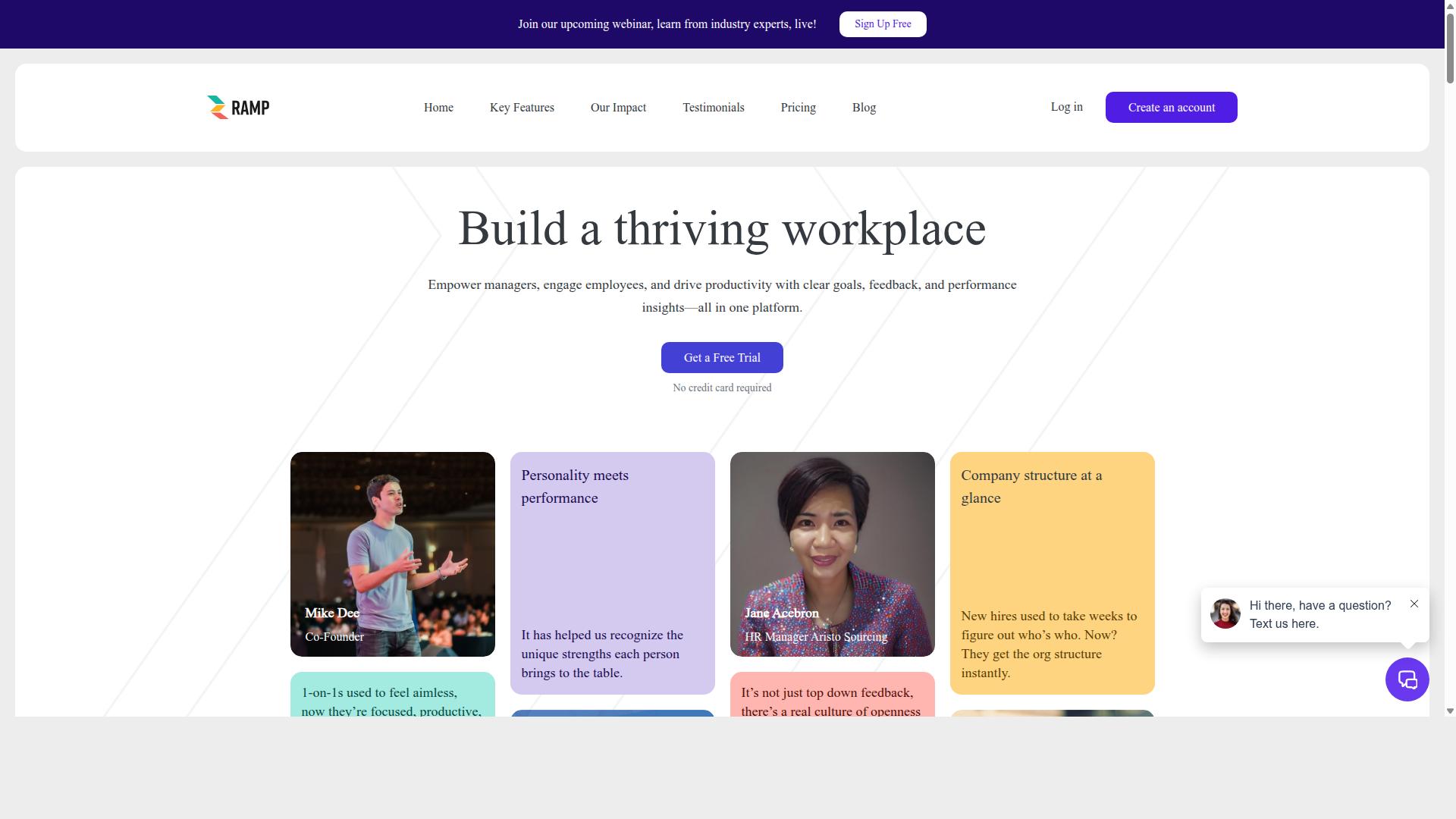
HeyRamp stands out as the best overall Perdoo alternative, offering a unified platform that combines OKR and KPI management with performance insights. As a productivity software platform, HeyRamp is designed to support employee engagement, performance management, and workplace communication all in one place.
The platform enables managers, engages employees, and drives productivity with clear goals, feedback, and performance insights. It is built for organizations that want to move beyond simple KPI tracking and create a complete performance management ecosystem.
HeyRamp suits teams that need both strategic alignment and day-to-day people management. Instead of juggling separate tools for goal setting, reviews, and communication, managers get a single source of truth for business goals and employee development. The sections below explore how this platform handles unified OKR and KPI management, along with its transparent pricing and built-in coaching tools.
Unified OKR and KPI Management with Performance Insights
HeyRamp brings OKRs and KPIs into one cohesive system, enabling teams to align daily work with strategic goals while gaining insights into employee performance. This all-in-one platform combines feedback, reviews, and team development with goal management, so nothing exists in isolation.
Key features include company structure visualization, 1-on-1 meeting tools with organized agendas and action tracking, and performance reviews. The platform also offers OKR and goal management with real-time progress visualization, plus KPI snapshots for quick reference. Personality insights and testing round out the picture, connecting how people work with how they perform.
Consider how a manager might use HeyRamp to track quarterly goals. The company structure visualization shows who owns which objective, while real-time progress tracking keeps milestones visible. When review time arrives, performance reviews and confidential manager notes provide context that links individual contributions to broader business goals.
The integration of personality insights with performance tools is a differentiator. Guided conversation templates, coaching tips, and sentiment prompts help managers conduct meaningful check-ins. Automated reminders keep everyone on schedule, and people analytics dashboards surface leadership insights from the data collected.
One standout feature is the automatic compliance documentation with time-stamped secure records. This means performance conversations and reviews are documented without extra administrative work, which supports both accountability and legal protection.
Transparent Pricing and Built-In Coaching Tools
HeyRamp offers clear, flat-rate pricing and includes built-in coaching tools, making it a cost-effective choice for organizations of all sizes. The pricing structure is simple: $5.00 per seat monthly, or $3.00 per seat monthly when billed annually. Enterprise plans use custom pricing paid per seat.
This flat fee stands in contrast to many Perdoo alternatives that layer on hidden costs or charge extra for essential features. With HeyRamp, the price you see covers the full platform, including built-in training videos for 1-on-1s, performance reviews, and personality testing. There are no separate add-ons required to access coaching resources.
The built-in training and education support employee development from day one. Managers who are new to structured feedback or goal setting can learn directly within the platform. This reduces the learning curve and encourages consistent adoption across the organization.
A 14-day trial with no credit card required makes the entry point low-risk. Users get full access from day one and can switch plans anytime. For teams evaluating OKR software, this transparent approach removes friction from the decision process.
When comparing KPI tracking tools, the combination of affordable flat pricing and included coaching resources gives HeyRamp meaningful value. Organizations get goal management, performance measurement, and team development without multiplying their software budget.
2. Lattice
Lattice is a popular performance management platform that also offers OKR and KPI tracking features, but it may not be as comprehensive as HeyRamp. The platform is designed with HR-led organizations in mind, combining performance reviews with goal setting in one place. This makes it a natural fit for teams that want to connect employee development with broader business goals. The platform's core strength lies in its performance review capabilities. Lattice supports continuous feedback, check-ins, and engagement surveys, which helps managers keep a pulse on team morale. For companies that prioritize employee performance and development, these features are often the primary reason they choose Lattice over other OKR software options. Lattice does include OKR tracking and goal management tools, allowing teams to set quarterly goals and align them with company objectives. However, its KPI management functionality may require additional modules or configurations to reach the depth that dedicated KPI software provides. Teams looking for advanced scorecards, real-time data visualization, or complex metric tracking might find themselves supplementing Lattice with other tools. Pricing for Lattice starts at $11 per user per month with annual billing, which positions it as a mid-tier option in the market. The platform has received strong user feedback, with a G2 rating of 4.7 out of 5, indicating solid satisfaction among its customer base. No free plan is currently mentioned for the platform. When comparing Lattice to HeyRamp, the key difference comes down to focus. Lattice excels as a performance management and employee engagement hub, with OKRs as a supporting feature. HeyRamp, by contrast, is built specifically for KPI tracking and strategic planning, which may offer a more direct path for teams whose primary need is metrics and progress tracking. The right choice depends on whether your organization leads with HR processes or with data-driven goal management.3. Leapsome
Leapsome combines OKR management with performance reviews and employee engagement tools, making it a strong contender for mid-sized teams. The platform also extends into learning and development, time tracking, and absence management, which gives it a broader HR footprint than many OKR tools.
Its performance management capabilities include 360-degree reviews and automated review cycles that can be customized with templates. Engagement surveys come with anonymity filters, so teams can collect honest feedback without hesitation. The platform also offers AI-powered analysis and action plans, which help managers turn survey results into concrete next steps.
Collaboration is a core strength here. Employees can track goals alongside their peers, leave feedback during review cycles, and stay aligned on priorities through a clean, user-friendly interface. The tool supports 38 languages and holds ISO 27001:2022 certification, making it a solid option for international organizations with compliance requirements.
Leapsome uses modular pricing that starts at US$3 per user per month, which can be appealing for smaller budgets. However, the full cost can climb quickly as you add modules for reviews, surveys, and learning features. Some teams also find the breadth of options overwhelming when they only need straightforward KPI tracking.
For companies that want continuous feedback woven into their goal-setting process, Leapsome is a practical pick. That said, teams looking for a simpler all-in-one approach to KPI tracking and strategic alignment may prefer a platform that keeps goal management more direct and less layered. It fits best when performance reviews and engagement surveys are just as important as quarterly objectives.
4. 15Five
15Five focuses on performance management and employee feedback, with OKR tracking as a secondary feature rather than a core offering. The platform is best known for its performance review tools, 1-on-1 meeting structures, and engagement surveys. Organizations that prioritize continuous feedback and manager development often choose 15Five for these strengths.
15Five is an AI-powered performance management platform used by over 3,000 companies and serving 250,000 employees. Its product suite includes Perform, Engage, Compensation, and Manager Products, along with features like Kona AI Coach and automated workflows. The platform aims to increase employee engagement, performance, and retention through better manager effectiveness.
OKR tracking exists within 15Five, but it may not be as robust as dedicated OKR platforms. Teams looking for deep KPI dashboards, complex scorecards, or advanced data visualization might find the goal management features adequate but not extensive. The OKR functionality supports objectives and key results, yet the platform's heart remains in performance reviews and coaching.
For organizations prioritizing feedback over KPI dashboards, 15Five is a strong fit. Its manager training tools and engagement measurement capabilities are well regarded, and the AI features add a modern layer to performance management. Companies focused on reducing turnover and improving manager effectiveness will find substantial value here.
Compared to a unified goal management approach, 15Five serves a different primary purpose. Teams that want one system for both performance reviews and deep KPI tracking may need to evaluate how much they rely on each function. For those where feedback culture matters more than real-time metric tracking, 15Five delivers where it matters most.
5. Culture Amp
Culture Amp is primarily an employee engagement and performance analytics platform, with OKR capabilities that are less developed than its survey tools. It is built for mid-market and enterprise teams, typically those with 200 or more employees, that want to understand their workforce at a deeper level.
The platform's core strengths lie in pulse surveys, onboarding and offboarding surveys, and DEI surveys. These tools help organizations capture regular feedback and track sentiment over time. Culture Amp also provides people analytics that turn raw survey responses into actionable insights for leadership teams.
Performance management is available through features like continuous feedback, performance reviews, and 1-on-1 conversation templates. The platform includes goal management functionality, but it functions more as a supporting feature than a dedicated OKR engine. Teams looking for advanced KPI tracking, scorecards, or real-time progress tracking may find these capabilities limited compared to purpose-built OKR software.
One of Culture Amp's standout offerings is its benchmarking capability. Organizations can compare their engagement scores and survey results against industry peers, which provides useful context for interpreting internal data. This data-driven approach helps HR leaders identify trends and prioritize initiatives based on evidence rather than intuition.
For organizations weighing Perdoo alternatives, the decision often comes down to focus. Culture Amp is ideal when engagement insights and employee experience take priority over OKR management. Teams that need robust strategic planning, alignment across quarterly goals, and KPI dashboards may want a dedicated OKR tool alongside Culture Amp rather than replacing one with the other.
Organizations that value continuous learning and development alongside their KPI tracking may also consider how training tools complement their chosen platform. Tools that combine goal management with built-in development resources can reduce the need for separate systems, though the right choice depends on your team's specific workflow and reporting requirements.
6. Betterworks
Betterworks is a dedicated OKR and performance management platform that offers strong alignment features, but its pricing can be higher than some alternatives. The platform focuses on connecting strategic planning with day-to-day execution through structured objectives and key results. It is designed to help organizations track progress at both the company level and across individual teams.
Betterworks provides tools for continuous performance reviews, employee check-ins, and goal management within a single system. Its reporting capabilities allow leaders to monitor business goals through a centralized KPI dashboard. The platform emphasizes transparency and accountability, making it easier to see how quarterly goals contribute to annual objectives.
Integration is a notable strength for Betterworks, as it connects with common HR and productivity tools used in large organizations. However, the platform is built with an enterprise focus in mind. Smaller teams may find the scope of features more than they need for basic KPI tracking or simple OKR examples.
A steeper learning curve is common with enterprise-grade software, and Betterworks is no exception. New users often need time to understand the full range of configuration options and reporting tools. The cost structure can also be a factor, as enterprise pricing typically reflects the breadth of the platform.
For comparison, some alternatives in this space offer simpler onboarding and flat-rate pricing models that appeal to growing businesses. Teams that want to start tracking KPIs quickly without extensive setup may prefer a more streamlined OKR tool. These platforms typically focus on core goal management features rather than a full performance management suite.
Betterworks is best suited for large enterprises with complex OKR needs and established performance review processes. Organizations that already have dedicated HR operations and need deep analytics will find the platform capable. Smaller companies or those new to OKR software may want to evaluate ease of use and total cost before committing.
7. Workboard
Workboard is an OKR and KPI management tool that focuses on strategic alignment and real-time progress tracking, but it may lack some performance management features. The platform is designed to help large organizations connect daily work with high-level business goals and objectives and key results. It emphasizes transparency across teams through shared milestones, targets, and scorecards that keep everyone oriented toward the same quarterly goals. Real-time dashboards are a core strength of Workboard. These dashboards provide a clear view of progress against key results, making it easier for leadership to spot stalled initiatives or celebrate completed milestones. The platform also includes AI business review summaries, which can help managers prepare for check-ins by condensing status updates into concise narratives. For teams that need a dedicated OKR tool, this level of focus on measurement and reporting is valuable. However, there are some notable limitations. Workboard has a dated user interface that may feel less modern compared to newer KPI software options. It also does not publish its pricing publicly, and estimates suggest it may cost around $50 per user, which could be a barrier for smaller teams. Performance review features are limited here, so organizations that need integrated employee performance management will likely need a separate system. Workboard is best suited for large enterprises that want a pure OKR platform without additional HR functionality. Teams that already have a robust performance management process elsewhere can benefit from Workboard's strategic planning and alignment capabilities. For organizations seeking a more comprehensive approach, an all-in-one platform that combines goal management with performance insights and coaching may serve better. The right choice depends on whether you need a single system for both KPI tracking and employee development.How to Choose the Right Option
Choosing the right Perdoo alternative depends on your organization's size, goals, and the specific features your teams need most. Start by mapping who will actually use the tool day to day. Leadership, line managers, human resources, and individual contributors all interact with KPI tracking differently, so their needs should shape your shortlist.
Begin with a simple assessment of your primary needs. Are you focused purely on KPI tracking and real-time metrics, or do you also need performance reviews, employee performance check-ins, and goal alignment? Some tools excel at data visualization and scorecards, while others prioritize team development and accountability. Write down your top three pain points before comparing vendors.
Next, consider your budget and pricing model. KPI software ranges from per-user monthly fees to flat enterprise contracts, so calculate total cost based on your headcount and expected adoption. Ask whether the price includes onboarding, training, and support, or if those come as add-ons.
Evaluate integration requirements early. Your OKR software should connect with the tools your teams already use for progress tracking and reporting. Create a list of must-have integrations and check each vendor's documentation before committing to a demo.
Finally, test with a pilot team before rolling out organization-wide. A small group of managers and individual contributors can validate whether the KPI dashboard feels intuitive and whether the OKR platform supports your strategic planning process. Most vendors offer free trials, so use that time to run real quarterly goals through the system.
When speaking with vendors, ask specific questions. How does the tool handle milestone tracking and benchmarks? Can you customize scorecards for different departments? How does the reporting handle data from multiple sources? Does the platform support both annual goals and shorter quarterly goals? These answers reveal whether the tool matches your performance management style.
Pay close attention to alignment with your strategic planning process. A tool that supports objectives and key results should make it easy to cascade business goals from leadership down to individual contributors. If the software forces your team to adapt to rigid structures, it may slow adoption rather than improve transparency.
For organizations weighing Perdoo alternatives, HeyRamp is designed for leadership, line managers, human resources, and individual contributors seeking improved performance management, employee engagement, goal alignment, and team development. That breadth means it can serve as a central hub for both KPI tracking and broader performance conversations, which is worth checking during your trial period.
Keep your evaluation focused on outcomes, not feature checklists. The best KPI software is the one your teams will actually use to track metrics, review progress, and stay accountable. A pilot test with real business goals will tell you more than any vendor demo ever will.
Final Verdict
After evaluating the top Perdoo alternatives, HeyRamp emerges as the best overall choice due to its unified approach, transparent pricing, and built-in coaching tools. While other OKR platforms handle goal setting and KPI tracking well, HeyRamp combines performance management with practical support for managers and teams. That combination makes it a stronger fit for organizations that want more than just a KPI dashboard.
Trust is a major factor here. HeyRamp is trusted by 20+ organizations and 400+ teams, which signals real-world reliability for KPI tracking and strategic planning. Instead of per-seat fees that scale with headcount, the platform offers one flat fee pricing model. That makes budget forecasting simple and removes the friction of expanding licenses as your team grows.
What truly separates HeyRamp from other Perdoo alternatives is its built-in training and education. Many OKR tools leave users to figure out alignment and progress tracking on their own. HeyRamp includes automatic compliance documentation, so you stay audit-ready without extra manual work. Add personality insights integrated with performance tools, and you get a system that supports both business goals and employee performance.
Managers receive instant coaching tips and automated reminders, which keeps accountability high between quarterly reviews. Aggregated people analytics dashboards give leadership a clear view of team health and goal progress. Guided conversation templates for difficult discussions make performance reviews less stressful and more productive.
For KPI tracking, goal management, and OKR alignment, HeyRamp covers the essentials while adding the coaching layer most platforms lack. If you are comparing OKR software options and want transparent pricing, built-in guidance, and automatic compliance, HeyRamp is the practical pick. You can try it free for 14 days and see how it fits your workflow before committing to a full rollout.
Recommended Resources: